Case study · Infrastructure
Closed by default, with a real restore drill each week.
Designed, built and operated by HyperScale.
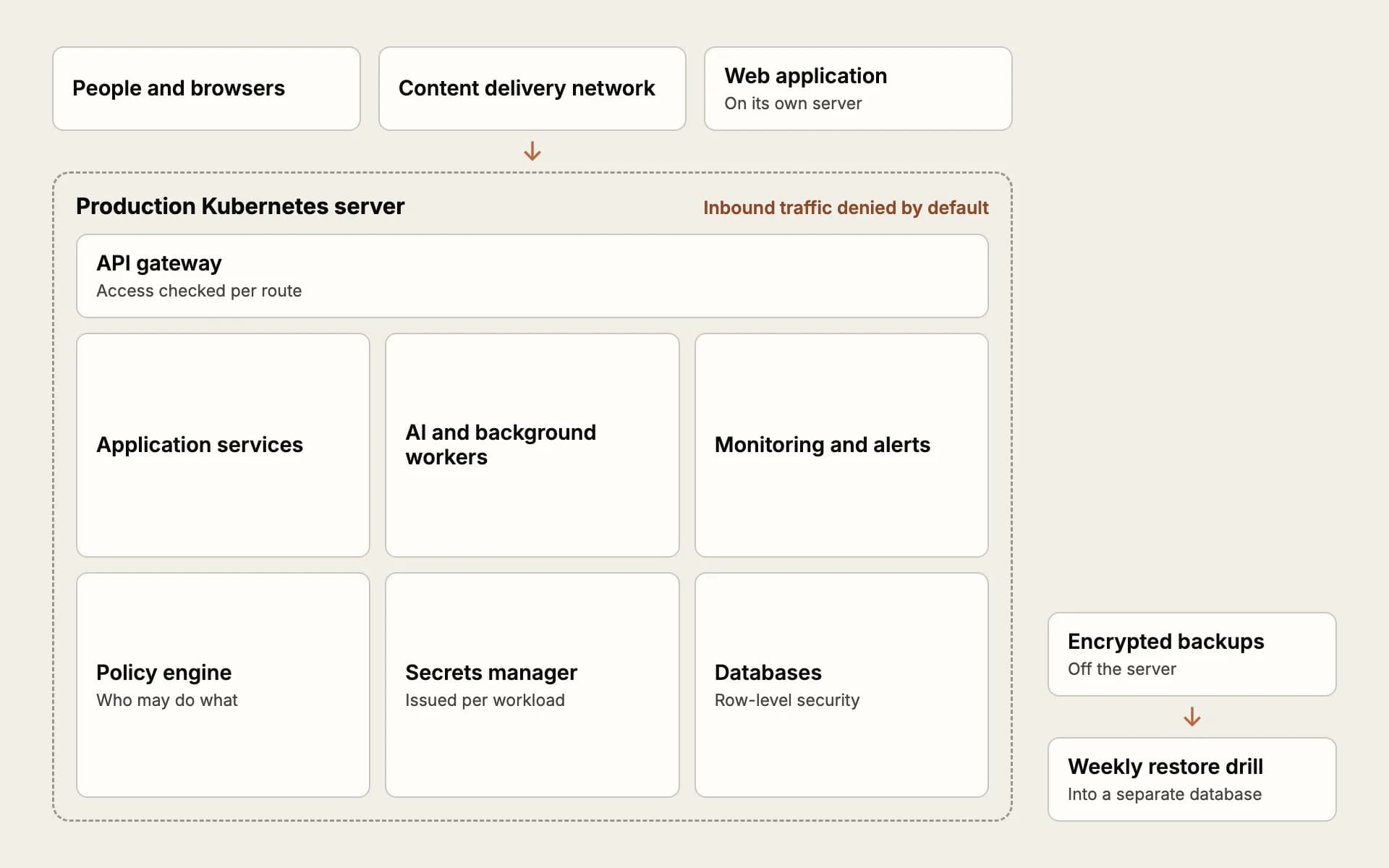
The platform HyperScale runs on is a production Kubernetes system we designed and operate ourselves: databases, gateway, authorization, AI workers and monitoring, with the safety steps automated so they do not depend on anyone remembering them.
- Automated restore of the latest encrypted backup
- Weekly
- Inbound traffic in each of our namespaces
- Default deny
- The Kubernetes platform today; not highly available
- One server
01The problem
Safety that depends on memory fails quietly
A multi-tenant product needs its network, secrets, access, backups and monitoring to hold up without depending on someone remembering a step.
02What we built
A platform with the safety steps built in
A production Kubernetes platform running our databases, gateway, authorization, AI workers and monitoring. Inbound traffic is denied by default, a dedicated secrets manager issues access by workload policy, and written policies decide who may do what.
03What it takes off your desk
The checks run without being asked
Each week an automated job restores the main database from the latest encrypted backup into a separate database and checks that key tables exist and are populated. Commits are scanned so credentials stay out of source control.
Where it stands
The Kubernetes platform runs on a single server and the web application on a second, so it is not highly available. We hold no security certification and make no availability commitment.
- Built
- March 2026 to present
- Stage
- Running in production on one server
- Ownership
- HyperScale product, owned by 2413189 Ontario Inc.
Before and after
What it takes off someone’s desk
Choose an area to see the job the platform does on its own.
Closed by default
Inbound traffic is denied by default in each of our namespaces, and declared policies define what may connect.
| The job | Before | Now |
|---|---|---|
| Deciding what may connect | Open until someone closes it | Denied unless a policy allows it |
| Reaching the services | Each service exposed its own way | One API gateway with per-route access control |
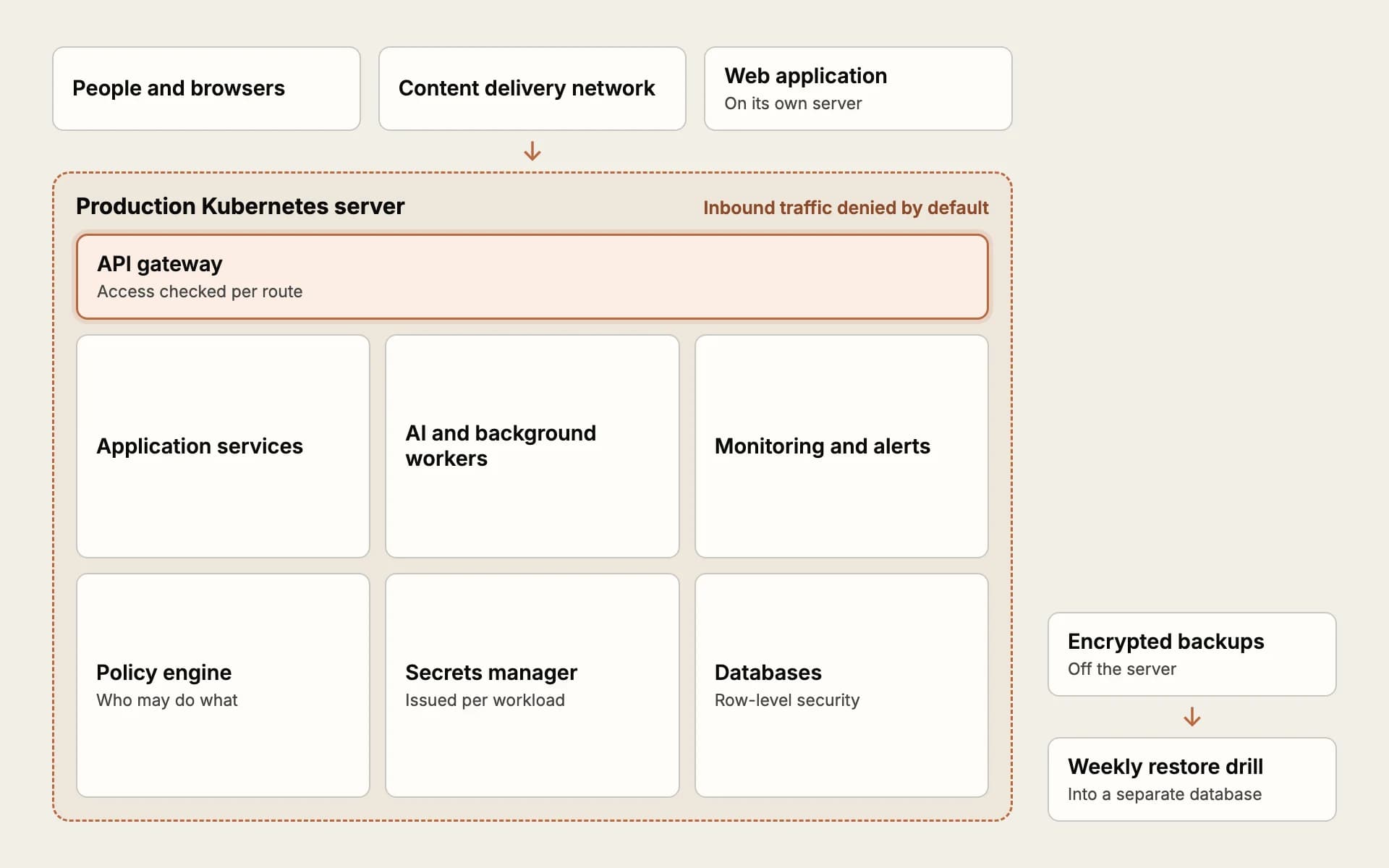
One request
- GatewayRoute checked
- Network policyPath allowed
- ServiceReached
Under the hood, for your technical teamShow details
Kubernetes on one 16-vCPU, 32 GB server, with an API gateway and per-route access control declared in version control, a dedicated secrets manager with per-workload policies, network policies, and encrypted backups with scheduled restore drills. In our own simulated load test on September 5, 2026, with the web tier then on Vercel, this server carried the backend for about 700 to 900 concurrent users with about 1% of requests failing. The current hosting has not been load-tested.
Need a platform that holds up without heroics?
We design and run the infrastructure under the software we build.
Book a call